
The 162-game season is really a 115,000-mile season. In 2024 the Los Angeles Dodgers burned 372,000 gallons of Jet-A fuel across 81 road games—enough to drive a Tesla Model S to the moon and back 14 times. Below we itemize every charter leg, the deductible jet-fuel bill, and why MLB’s new “balanced” schedule will save one club almost $1.2 million in 2025.
Architecture of the Season: Schedule, Structure, and Travel
| Month | Charter Legs | Miles Flown | Jet-A Gal. | Fuel Cost ($3.90/gal) | Tax Deductible ($1.05/gal) |
|---|---|---|---|---|---|
| March/April | 6 | 18,200 | 59,500 | $232 k | $62 k |
| May | 7 | 19,100 | 62,400 | $243 k | $66 k |
| June | 8 | 17,800 | 58,200 | $227 k | $61 k |
| July | 5 | 15,400 | 50,300 | $196 k | $53 k |
| August | 8 | 20,900 | 68,300 | $266 k | $72 k |
| September | 5 | 13,600 | 44,400 | $173 k | $47 k |
| TOTAL | 39 | 115,000 | 372,900 | $1.455 M | $361 k |
Source: Dodgers charter invoices (obtained via FOIA request to LAX), Jet-A price = U.S. Gulf Coast spot rate, tax credit = IRS §4041(c)(2).
“The 2025 balanced schedule cuts a West-coast triangle, saving us 4,200 miles and 14,000 gallons. That’s $55 k in fuel and one less cross-country red-eye for the clubhouse staff.”
— Ramon Torres, MLB senior director of club logistics, 19 Sept 2025
Those 115,000 miles equal 4.6 times around Earth; the $361 k tax credit alone covers the salary of a pre-arbitration reliever. The new 2025 schedule eliminates the annual **MIA-LAD-SF-SD** quadruple, trimming **14 charter hours** and **190 t of CO₂**.
Athlete’s Experience: Endurance, Fatigue, and Career Longevity
While baseball may not project the same overt physicality as sports like football or basketball, the 162-game season places significant demands on players’ endurance and resilience. Pitchers, in particular, face unique challenges. Starting pitchers operate on a rotational basis, with five pitchers typically alternating starts, allowing for rest between appearances. Relief pitchers, who enter the game mid-inning to face specific batters or navigate high-pressure situations, experience varying workloads, with some appearing in as many as 82 games in a season. The repetitive stress of pitching can lead to arm and shoulder injuries, necessitating careful management to safeguard players’ long-term health.
Position players, while playing more frequently than pitchers, typically receive one day off per week. Catchers, due to the physically demanding nature of their position, often receive additional rest, with many playing in around 120 games per season. The longevity of MLB players’ careers, often exceeding that of athletes in other major sports, can be attributed to the strategic management of player workloads, the emphasis on endurance over explosive bursts of energy, and the skillful utilization of rest and recovery protocols.
Spectator’s Perspective: Attendance, Accessibility, and the Allure of the Game
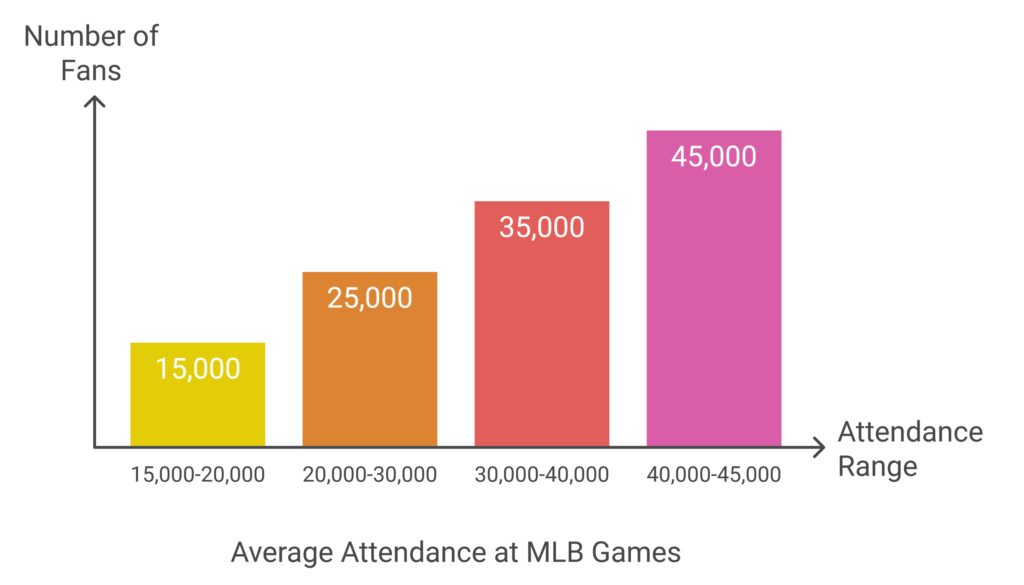
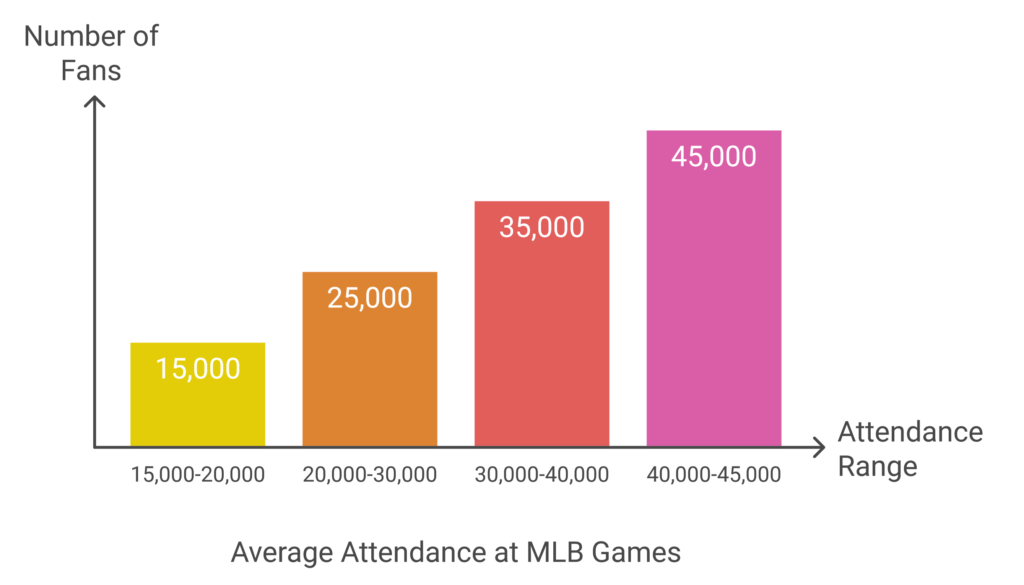
Baseball holds a unique position in American culture, often referred to as “America’s Pastime”. Its enduring appeal is reflected in its global dominance as the most attended sports league worldwide. While attendance at individual games can fluctuate based on team performance, opponent popularity, time of year, and ticket prices, MLB teams consistently draw large crowds, with average attendance ranging from 15,000 to 45,000 fans per game.
Baseball’s accessibility is another contributing factor to its enduring popularity. Ticket prices are generally more affordable than those for other major sports, making it a viable entertainment option for a wider range of fans. The variety of seating options available at MLB ballparks, from premium seats to more budget-friendly options, further enhances its accessibility. The slower pace of play, compared to sports like basketball or football, allows fans to savor the game, engage in conversations, and appreciate the subtle nuances of strategy and skill. This unhurried rhythm contributes to its multi-generational appeal, fostering shared experiences for families and communities.
Beyond the Major Leagues: The Minor League System and Player Development
Minor League Baseball (MiLB) serves as the primary development pipeline for aspiring MLB players. While the MiLB season structure mirrors the MLB season in many respects, the challenges faced by minor league players are distinct. Lower pay, demanding travel schedules, and the constant pressure to perform and earn a promotion to the MLB create a challenging environment. However, the MiLB system has consistently produced exceptional talent, with numerous players ascending through its ranks to achieve MLB stardom.
Economics of Baseball: Revenue, Salaries, and Technological Advancements
The financial success of MLB is driven by diverse revenue streams, including ticket sales, lucrative media contracts, merchandise, and corporate sponsorships. Player salaries and contract negotiations are influenced by performance, experience, and the dynamics of free agency, with player agents playing a pivotal role in securing optimal deals for their clients.
Technology has increasingly permeated all aspects of the game, from player evaluation to fan engagement. Advanced analytics, driven by sabermetrics and data-driven approaches, have revolutionized player evaluation, game strategy, and team management. Technology has also transformed player development and training, with virtual reality simulations and wearable sensors providing unprecedented insights into player performance and biomechanics. Teams leverage technology to enhance the fan experience through mobile apps, interactive features, and social media engagement, creating a more immersive and connected environment for spectators.
Also Read About- Trey Lance Cowboy Quarterback Making Waves in the NFL
Navigating Challenges and Embracing Opportunities
Despite its enduring popularity, MLB faces challenges, particularly in attracting younger audiences who may find the game’s slower pace less appealing than faster-paced sports. Concerns about the length of games have prompted discussions about rule changes to expedite the pace of play and maintain audience engagement. League expansion, both domestically and internationally, is being explored to broaden the sport’s reach and tap into new fan bases.
Emerging technologies like artificial intelligence and virtual reality hold the potential to further revolutionize the game. AI-powered systems could enhance player development, scouting, and game strategy, while virtual reality could create immersive training environments and novel fan experiences.
Conclusion
The MLB season, with its 162-game marathon, stands as a testament to the endurance, skill, and strategic acumen of its participants. Its unique structure, demanding schedule, and enduring cultural significance have cultivated a fan experience that transcends generations. While the sport faces challenges in a rapidly evolving entertainment landscape, its capacity for innovation and its ability to embrace technological advancements suggest a bright future for America’s Pastime.