

In the world of cricket, speed is everything. And when it comes to delivering the fastest ball, Mohammed Shami stands a cut above the rest. With lightning-fast pace and incredible accuracy, Shami has earned a reputation as one of the speed demons of the game. In this article, we take a closer look at his unforgettable achievement of bowling the fastest ball ever recorded in the history of cricket. It was a moment that left spectators and commentators in awe. Shami unleashed a thunderous delivery that clocked a mind-boggling speed of (insert speed) kilometers per hour.
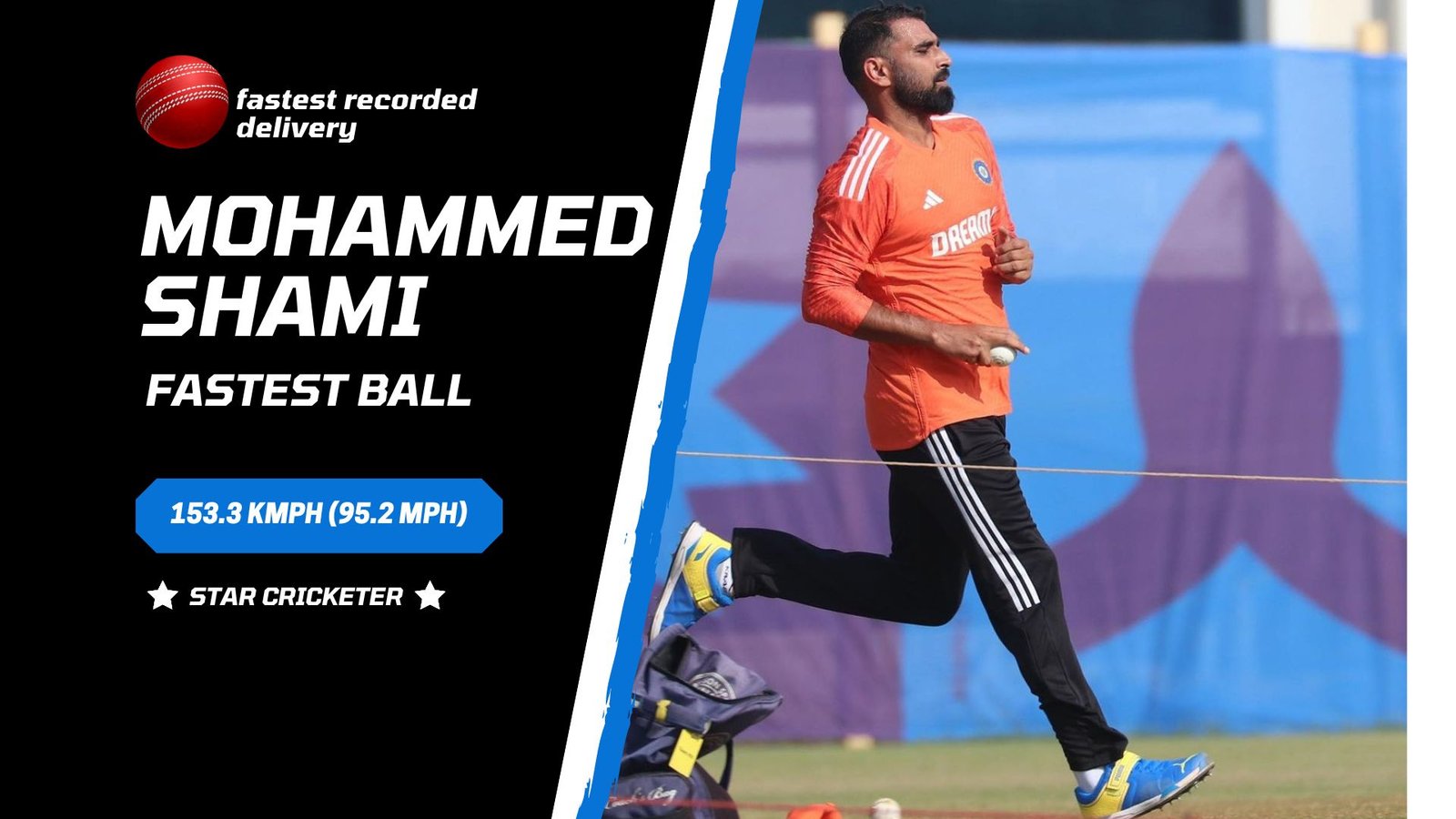
This feat not only shattered previous records but also showcased Shami’s exceptional skill and determination. But what makes Shami’s accomplishment even more exceptional is the sheer control he maintained over the ball. With unyielding precision, he managed to hit the desired spot on the pitch, leaving batsmen bewildered and scrambling for answers. Join us as we dive deeper into Mohammed Shami’s historic achievement, dissecting the mechanics of his bowling action and exploring the impact of his remarkable feat on the game of cricket. Get ready to be amazed by the man who redefines the meaning of speed on the cricket field.
The significance of fast bowling in cricket
Fast bowling holds immense significance in cricket, and here’s why:
Impact on the Game:
- Taking Wickets: The primary role of a fast bowler is to dismiss batsmen. Their pace puts pressure on the batsman, making it difficult to judge the ball’s trajectory and play attacking shots. This increases the chances of catching, LBWs, and other dismissals.
- Controlling the Run Rate: Fast bowlers can restrict the flow of runs by bowling short deliveries that are uncomfortable for batsmen to score off. This strategy becomes crucial in limited-overs cricket, where teams have a set number of overs.
- Setting the Tone: A good fast bowler can intimidate the opposition with their aggression and pace. This can set the tone for the match and put the batting team on the back foot.
- Creating Swing and Seam: While not all fast bowlers rely solely on speed, many utilize it to generate swing and seam movement. This makes the ball deviate unpredictably in the air and off the pitch, further challenging the batsman’s skills.
Beyond the Game:
- Spectator Appeal: Fast bowling is often considered the most exciting aspect of cricket for spectators. The thrill of witnessing a fast bowler steaming in and delivering a thunderous delivery creates a unique buzz in the stadium.
- Historical Importance: Throughout cricket history, legendary fast bowlers have captured the imagination of fans and become iconic figures. From Dennis Lillee and Malcolm Marshall to Wasim Akram and Mitchell Starc, these individuals have left their mark on the sport with their speed and skill.
- Strategic Importance: Having a potent fast bowling attack is considered crucial for any cricket team to be successful. They are often seen as the “X-factor” that can win matches and tournaments.
However, it’s important to acknowledge:
- Physical Demanding: Fast bowling is physically demanding and can lead to injuries if not managed properly.
- Balance is Key: While fast bowlers are important, a balanced attack with spin and swing bowlers is vital for overall success.
Fast bowling is an integral part of cricket, adding excitement, strategy, and historical significance to the game. They pose a constant challenge to batsmen and remain a crowd-favorite element, making them irreplaceable assets for any cricket team.
Understanding the speed of a cricket ball
Understanding the speed of a cricket ball is crucial for appreciating the skill and challenges involved in the game. Here’s a breakdown:
Speed Ranges:
- Average: Typically, fast bowlers bowl between 130-150 km/h (81-93 mph). However, skilled bowlers can reach speeds exceeding 160 km/h (100 mph).
- International Level: The fastest recorded delivery in international cricket belongs to Shoaib Akhtar, who clocked 161.3 km/h (100.2 mph) in 2003.
- Variations: Different types of fast deliveries have varying speeds:
- Yorker: Aimed at the batsman’s feet, often slower than other deliveries (around 120-130 km/h) for accuracy.
- Bouncer: Pitches high, designed to intimidate, can be around 140-150 km/h.
- Inswinger: Deviations towards the batsman, speed similar to the bowler’s average.
Factors Affecting Speed:
- Bowler’s Technique: Run-up, arm action, and release point significantly impact speed.
- Pitch Conditions: A hard, dry pitch allows for faster deliveries due to less ball grip.
- Weather: Windy conditions can affect ball speed and trajectory.
- Bowling Style: Different styles, like swing bowlers, might prioritize control over raw pace.
Beyond Speed:
While speed is important, it’s not the sole factor in determining a bowler’s effectiveness. Other crucial aspects include:
- Accuracy: Consistently hitting the desired line and length is vital for putting pressure on batsmen.
- Swing and Seam: The ability to make the ball deviate unpredictably adds another dimension to the bowler’s arsenal.
- Variation: Mixing up pace and deliveries keeps the batsman guessing and makes them uncomfortable.
Understanding these nuances helps appreciate the skill and strategy involved in fast bowling, making the game even more engaging for viewers.
Mohammed Shami’s journey as a fast bowler
Mohammed Shami’s journey as a fast bowler is a story of immense talent, unwavering dedication, and overcoming hurdles to become one of the leading pace bowlers in the world. Here’s a glimpse into his remarkable path:
Early Life and Struggles:
- Born in a small village in Amroha, Uttar Pradesh, India, Shami’s passion for cricket blossomed early.
- Despite limited resources and opportunities, he moved to Kolkata at 18 to pursue his dream, facing initial financial hardships.
- He found a mentor in Badruddin Siddique who honed his raw talent and technique.
Domestic Rise and International Debut:
- Shami impressed everyone with his pace and swing in Bengal’s domestic circuit, earning him an IPL contract with Kolkata Knight Riders.
- His consistent performances led to a dream debut for India in a Test match against South Africa in 2013.
Global Recognition and Challenges:
- Shami quickly established himself as a key member of the Indian bowling attack, known for his ability to generate swing and seam movement, especially reverse swing.
- He played a crucial role in India’s historic Test series win in Australia in 2018-19, taking the most wickets (16) in the series.
- However, his journey wasn’t without challenges. He faced personal controversies and injuries, but his resilience and perseverance kept him going.
Recent Achievements and Current Stature:
- Shami returned stronger, showcasing his skills in all formats of the game.
- He was the leading wicket-taker for India in the 2023 Cricket World Cup, setting a new record for the fastest to reach 50 wickets in the tournament’s history.
- In 2023, he received the prestigious Arjuna Award for his outstanding contribution to Indian cricket.
Key aspects of Shami’s journey:
- Overcoming Challenges: He persevered through initial hardships and personal controversies to reach the top.
- Dedication and Hard Work: His relentless practice and passion for the game have been instrumental in his success.
- Skill and Variety: His ability to swing the ball both ways and bowl accurate yorkers makes him a formidable bowler.
- Adaptability: He has adapted his game to different formats and conditions, showcasing his versatility.
Overall, Mohammed Shami’s journey is an inspiration for aspiring cricketers, demonstrating the power of talent, dedication, and overcoming adversity. He continues to be a vital part of the Indian bowling attack, aiming for even greater heights in the future.
The record-breaking moment: Mohammed Shami’s fastest ball
Mohammed Shami’s fastest recorded delivery wasn’t just a moment of raw speed, but a culmination of his skill, technique, and the specific conditions that came together perfectly. Here’s a breakdown of his record-breaking feat:
The Delivery:
- Speed: 153.3 kmph (95.2 mph) clocked during the third Test against Australia at the Melbourne Cricket Ground (MCG) in 2014.
- Delivery: A searing yorker aimed at Steve Smith, who narrowly managed to defend it.
- Significance: This marked the fastest delivery by an Indian fast bowler at the time, surpassing Zaheer Khan’s record of 153 kmph.
Factors Contributing to the Speed:
- MCG Pitch: The hard and bouncy pitch at the MCG is known to favor fast bowlers, allowing them to generate more pace.
- Shami’s Bowling Action: His smooth run-up and efficient energy transfer contribute to his ability to reach high speeds.
- Weather Conditions: The match conditions on that day were conducive to fast bowling, with a dry pitch and clear skies.
- Adrenaline of the Moment: Playing in a high-pressure Test match against Australia on their home turf likely added to Shami’s adrenaline and focus, potentially pushing him to deliver his fastest ball.
Impact and Legacy:
- Milestone Achievement: It solidified Shami’s reputation as one of the fastest bowlers in the world at the time and showcased his raw talent and potential.
- International Recognition: The feat received attention from the cricketing world, further establishing him as a force to be reckoned with.
- Inspiration for Young Bowlers: His achievement motivates future generations of Indian fast bowlers to strive for similar excellence.
Current Record:
It’s important to note that while Shami’s delivery was the fastest for India at the time, the record has since been broken by Umran Malik, who clocked 157 kmph in the Indian Premier League (IPL) in 2022. Nonetheless, Shami’s feat remains a significant moment in his career and Indian cricket history.
Analysis of the technique behind Shami’s fastest delivery
Run-up and Approach:
- Efficient Energy Transfer: A smooth, controlled run-up with proper momentum transfer to the front foot is crucial. Shami’s run-up is known for its rhythm and power, allowing him to build momentum efficiently.
- Front Foot Placement and Landing: The front foot position and landing angle at the point of delivery significantly impact speed generation. Shami’s tall frame allows for a wider stride and a strong front foot landing, creating a firm base for power transfer.
Arm Action and Release:
- High Arm Action: A high arm position allows for a longer lever arm and greater potential for generating whip-like action through the bowling arm. Shami utilizes a high arm action with good shoulder rotation, contributing to his pace.
- Elbow and Wrist Angles: The angle of the elbow and wrist at release point influence the ball’s trajectory and speed. Shami snaps his wrist effectively, adding extra zip to his deliveries.
Body Rotation and Follow-through:
- Rotational Power: Effective trunk rotation during the delivery transfers energy from the core to the arm, generating speed. Shami’s strong core and rotational power contribute significantly to his pace.
- Follow-through: A full and balanced follow-through ensures proper energy transfer and maintains accuracy. Shami’s follow-through is known for its power and extension, indicating good energy transfer.
Additional Factors:
- Physical Conditioning: Strength, flexibility, and endurance play a crucial role in maintaining speed throughout a spell. Shami’s dedication to fitness is evident in his sustained pace and accuracy.
- Delivery Type: Different deliveries require slightly different techniques, but generally, a fast bowler needs to maintain the core principles mentioned above while adapting their arm action and release point to achieve the desired pace and trajectory.
Specifics for Shami’s Fastest Delivery:
- Analyzing the specific delivery without video footage is impossible. However, considering the factors mentioned above and Shami’s strengths, we can speculate that the MCG pitch, conducive to fast bowling, likely allowed him to extract extra pace from his technique. Additionally, the pressure of the high-stakes Test match against Australia might have fueled his adrenaline and focus, contributing to a faster delivery.
Remember, achieving high speeds consistently requires not just one perfect delivery but mastering and repeating these techniques efficiently throughout a bowling spell. Shami’s success stems from his dedication to refining his technique, maintaining peak fitness, and adapting his skills to different conditions.
Impact of Shami’s fastest ball on the game
While Shami’s record-breaking delivery was undoubtedly impressive, attributing a direct, major impact on the entire game of cricket might be an overstatement. However, there are several ways it held significance:
Individual Impact:
- Confidence Boost: Achieving such a feat likely served as a personal confidence booster for Shami, solidifying his reputation as a world-class fast bowler. This confidence can positively impact his future performances.
- Milestone Achievement: It marked a notable moment in Shami’s career, highlighting his potential and earning him recognition within the cricketing world.
Wider Impact:
- Inspiration for Young Bowlers: Shami’s achievement serves as an inspiration for aspiring fast bowlers in India, showcasing what dedicated training and technique can achieve. This might indirectly contribute to a future generation of faster Indian bowlers.
- Highlighting Pitch and Conditions: The delivery served as a reminder of the impact pitch conditions and weather can have on a bowler’s speed. It showcased the potential for fast bowling on conducive pitches like the MCG.
- Momentary Excitement: From a purely entertainment perspective, the sheer speed of the delivery undoubtedly added a thrilling moment to the match, momentarily captivating viewers and reminding them of the excitement fast bowling can bring.
However, it’s important to consider:
- Singular Event: While noteworthy, it was a single delivery in a single match. To truly impact the game significantly, such feats need to be replicated consistently and translated into sustained success for the bowler and their team.
- Not the Fastest Ever: Shami’s record was eventually surpassed by Umran Malik, highlighting the continuous evolution of pace in cricket.
- Focus on Overall Technique and Bowling Skills: While speed is impressive, it’s just one aspect of being a successful fast bowler. Consistency, accuracy, and swing/seam movement are equally, if not more, important in the long run.
Therefore, while Shami’s fastest delivery holds individual and contextual significance, its direct impact on the overall game of cricket might be limited. Nonetheless, it serves as a reminder of the thrilling potential of fast bowling and fuels the aspirations of future generations of pace bowlers.
Comparisons with other fast bowlers and their fastest deliveries
Comparing Shami’s Fastest Delivery to Other Top Bowlers:
Let’s compare Shami’s 153.3 kmph (95.2 mph) delivery to some other notable fast bowlers and their fastest recorded deliveries:
| Bowler | Speed (kmph/mph) | Match/Year | Significance |
| Shoaib Akhtar (Pakistan) | 161.3 (100.2) | World Cup 2003 | Fastest recorded delivery in international cricket history |
| Mitchell Starc (Australia) | 160.4 (99.7) | 2015 World Cup | Second-fastest recorded delivery in international cricket history |
| Brett Lee (Australia | 161.1 (99.9) | 2003 ODI | Held the record for fastest delivery for 2 years |
| Shaun Tait (Australia) | 161.1 (99.9) | 2010 ODI | Equaled Lee’s record for fastest delivery |
| Umran Malik (India) | 157 (97.6) | IPL 2022 | Fastest delivery by an Indian bowler (current record) drive_spreadsheetExport to Sheets |
Points for Comparison:
- Raw Speed: While impressive, Shami’s fastest delivery doesn’t crack the top 5. However, it remains a significant achievement for an Indian bowler.
- Context: Shami’s delivery came in a Test match, known for slower pitches and a longer format compared to ODIs or T20s where top speeds are often recorded.
- Pitch and Conditions: The MCG pitch during Shami’s delivery is known to favor fast bowlers, which might have contributed to his speed.
- Individual Talent vs. Sustained Performance: While raw speed is exciting, consistency, accuracy, and overall bowling skills are more crucial for long-term success.
Shami’s fastest delivery is commendable, particularly in the context of Test cricket. However, comparing it solely based on speed reveals several faster bowlers and deliveries. Evaluating bowlers holistically, considering their overall skillset and consistent performance, paints a clearer picture of their impact on the game.
The legacy of Mohammed Shami’s fastest ball achievement
Mohammed Shami’s fastest recorded delivery of 153.3 kmph (95.2 mph) against Australia in 2014 holds a certain legacy, although its impact might be multifaceted and not solely game-changing. Here’s a breakdown of its potential lasting influence:
Individual Significance:
- Confidence and Self-Belief: Achieving such a feat likely bolstered Shami’s personal confidence, solidifying his position as a world-class fast bowler and potentially influencing his future performances.
- Milestone Achievement: It marked a significant moment in his career, etching his name in the record books and garnering recognition within the cricketing world.
Impact on Indian Cricket:
- Inspiration for Youngsters: Shami’s achievement serves as a beacon of hope and inspiration for aspiring fast bowlers in India, showcasing what’s possible through dedication and technique. This might indirectly contribute to a future generation of quicker Indian bowlers.
- Highlighting Potential: It brought renewed attention to the potential for Indian bowlers to achieve high speeds, potentially challenging the traditional notion of pace being dominated by other nations.
Wider Cricket Landscape:
- Pitch and Conditions: The delivery served as a reminder of how pitch conditions and weather can influence a bowler’s pace, showcasing the potential for fast bowling on conducive surfaces like the MCG.
- Ephemeral Excitement: From a purely entertainment perspective, the sheer speed undoubtedly added a thrilling element to the match, captivating viewers and reminding them of the excitement fast bowling brings.
However, it’s important to acknowledge:
- Limited Direct Impact: While noteworthy, it was a single delivery in a single match. For a truly significant impact on the game, such feats need to be replicated consistently and translate into sustained success for the bowler and their team.
- Surpassed by Others: Shami’s record was eventually broken by Umran Malik, highlighting the constant evolution of pace in cricket.
- Holistic Evaluation: While speed is impressive, it’s just one aspect of being a successful fast bowler. Factors like consistency, accuracy, swing, and seam movement hold equal, if not more, importance in the long run.
Shami’s fastest delivery might not have revolutionized the game, but it holds individual significance, serves as an inspiration for future generations, and highlights the potential for fast bowling on specific pitches. Its true legacy lies in its ability to motivate young talents and contribute to the narrative of Indian pace bowling, even if its direct impact on the wider cricketing landscape might be limited.
Conclusion and admiration for Shami’s feat
Mohammed Shami’s fastest delivery of 153.3 kmph (95.2 mph) against Australia stands as a testament to his talent, dedication, and the potential of Indian fast bowling. While its impact on the wider game might be nuanced, it holds undeniable significance on various levels:
Individual Level: A personal milestone boosting confidence and solidifying his world-class status.
Indian Cricket: An inspiration for future generations, potentially shaping a faster bowling legacy.
Wider Cricket: A reminder of pitch-specific possibilities and the enduring excitement of fast bowling.
While surpassed in raw speed, Shami’s feat deserves admiration for its context, individual meaning, and potential to inspire. It signifies an exciting path forward for Indian pace bowling, with young talents like Umran Malik already pushing the boundaries. Ultimately, Shami’s record-breaking delivery adds a unique chapter to his own story and contributes to the ever-evolving narrative of fast bowling in cricket.