
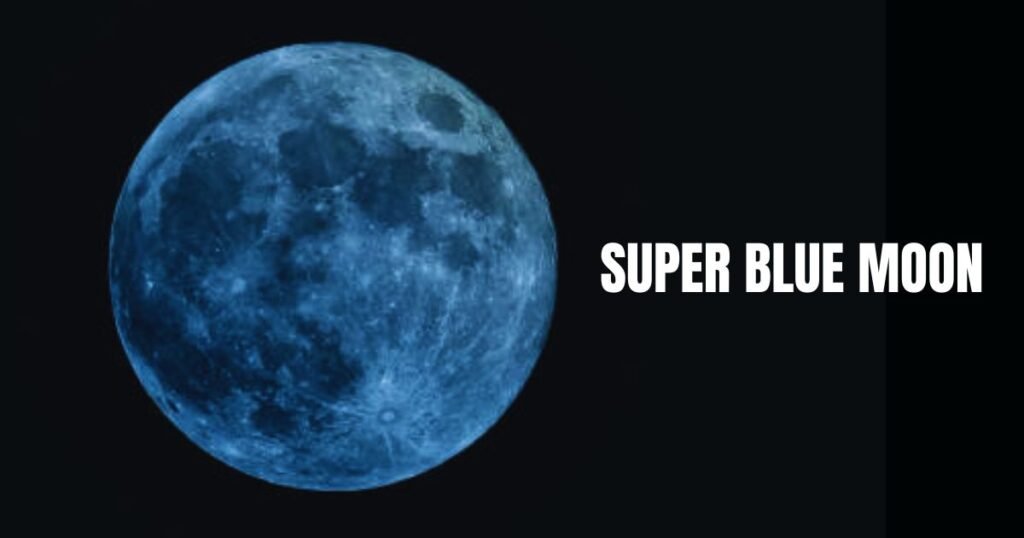
Get ready for a special sight in the sky! A rare Super Blue Moon is coming. This means you’ll see a very big and bright moon. It’s a special event that doesn’t happen often. So, look up and enjoy the amazing view.
The Super Blue Moon is getting very close to Earth! This makes it look bigger and brighter than usual, turning the night sky into a magical, glowing place. It’s a special moment to enjoy the beauty of space and think about the amazing universe we live in.
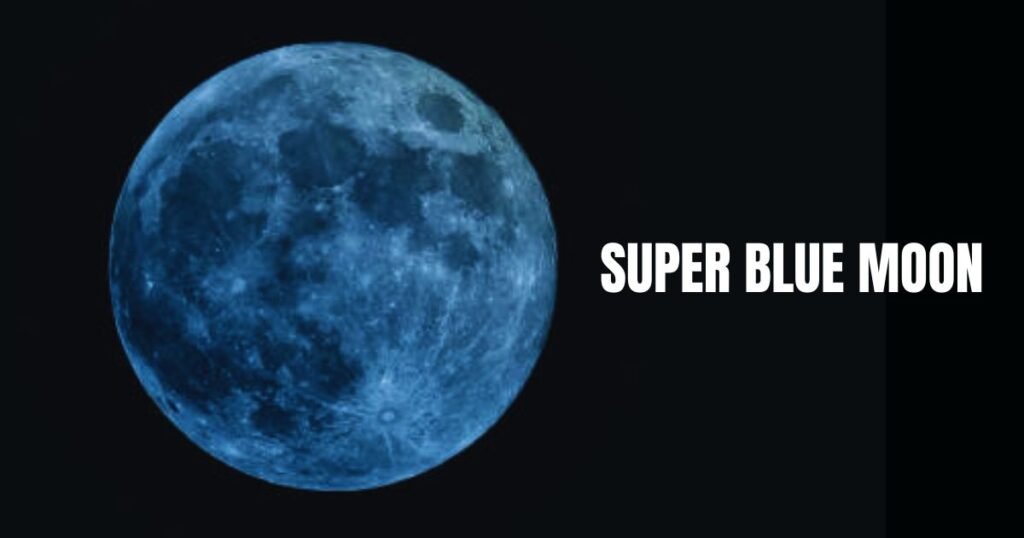
A Super Blue Moon is a very special moon that only happens a few times every year. It’s a beautiful sight that everyone should see at least once. Even if you don’t usually look at the stars, this is a moon you won’t want to miss.
Get ready for a magical night with your favorite people. Find a comfy spot outside and enjoy the beautiful, big moon together. It’s a rare sight that will make you feel small and amazed by the universe. Take some time to think, relax, and be inspired by the wonder of the world around us.
What is a Super Blue Moon?
A Super Blue Moon is a rare astronomical event that occurs when a full moon coincides with both a supermoon and a blue moon.
Definitions
- Supermoon: This term refers to a full moon that occurs when the moon is at or near its closest point to Earth in its elliptical orbit, known as perigee. During a supermoon, the moon can appear up to 14% larger and 30% brighter than when it is at its farthest point (apogee) from Earth.
- Blue Moon: The term “blue moon” has two definitions:
- Seasonal Blue Moon: This is the third full moon in a season that contains four full moons. Typically, each season has three full moons, but occasionally, due to the lunar cycle of approximately 29.5 days, a season can have an extra full moon.
- Monthly Blue Moon: This refers to the second full moon that appears in a single calendar month. This type of blue moon occurs more frequently, about every two to three years.
The combination of a supermoon and a blue moon is particularly rare, occurring roughly once every decade. The next occurrence after August 2024 will not be until January and March of 2037.
The rarity of a Super Blue Moon
A Super Blue Moon is a rare astronomical event that combines two distinct phenomena: a supermoon and a blue moon. The rarity of this event is significant due to the specific conditions required for both to occur simultaneously.
Rarity of Blue Moons and Supermoons
- Blue Moon: A blue moon can be defined in two ways:
- Monthly Blue Moon: This occurs when there are two full moons in a single calendar month, which happens approximately every two to three years.
- Seasonal Blue Moon: This is the third full moon in a season that has four full moons, which is less common. The next seasonal blue moon after August 2024 will not occur until May 2027.
- Supermoon: A supermoon occurs when a full moon coincides with the moon being at its closest point to Earth (perigee). Supermoons happen about three to four times a year, making them relatively more frequent than blue moons.
The combination of a supermoon and a blue moon is quite rare. While blue moons occur every two to three years, a super blue moon can happen only about once every decade on average. The time between occurrences can vary significantly, ranging from about 10 to 20 years. The next super blue moons after August 2024 are predicted to occur in January and March of 2037.
The science behind a Super Blue Moon
The Super Blue Moon is a fascinating astronomical event that combines two distinct phenomena: a supermoon and a blue moon. Understanding the science behind this event requires a closer look at both components and the conditions that lead to their occurrence.
Supermoon
A supermoon occurs when the full moon coincides with the moon’s closest approach to Earth, known as perigee. The key characteristics of a supermoon include:
- Proximity: During a supermoon, the moon can be approximately 14% larger and 30% brighter than when it is at its farthest point from Earth (apogee). This increased brightness and size are due to the moon being about 43,000 kilometers (27,000 miles) closer to Earth at perigee compared to apogee.
- Orbital Mechanics: The moon’s orbit around Earth is elliptical, meaning its distance varies. The term “supermoon” was popularized by astrologer Richard Nolle in 1979, though it does not have a strict scientific definition. It generally refers to a full moon that occurs when the moon is within 90% of its closest approach to Earth.
Blue Moon
A blue moon refers to a rare occurrence of a full moon that happens under one of two definitions:
- Monthly Blue Moon: This is the second full moon in a single calendar month. Given that the lunar cycle is about 29.5 days, having two full moons in one month is uncommon, occurring roughly every two to three years.
- Seasonal Blue Moon: This is the third full moon in a season that contains four full moons, rather than the usual three. The next seasonal blue moon will occur in May 2027.
When these two phenomena coincide, you get a Super Blue Moon. Here are the scientific aspects involved:
- Alignment: For a super blue moon to occur, the Earth, moon, and sun must be aligned, with the moon fully illuminated. This alignment is known as syzygy, which occurs during both full and new moons.
- Gravitational Effects: The gravitational pull of the moon during a supermoon can slightly affect ocean tides, leading to minor fluctuations in coastal high and low tides. However, these effects are typically not significant enough to cause major disruptions.
- Visual Appearance: Despite the term “blue,” the moon does not actually appear blue in color. The name comes from its rarity. However, atmospheric conditions, such as the presence of smoke or dust, can occasionally cause the moon to appear bluish, but this is unrelated to the blue moon designation.
Super Blue Moon is a captivating event that showcases the intricate dance of celestial bodies and the unique conditions required for such an occurrence. It serves as a reminder of the dynamic nature of our solar system and the beauty of astronomical phenomena.
Historical significance of Super Blue Moons
Super Blue Moons have held historical significance in various cultures and belief systems throughout history, though their rarity makes them less documented than other lunar phenomena. Here are a few notable points about the historical significance of Super Blue Moons:
Astrological Significance
In astrology, Super Blue Moons are believed to hold special significance. Some astrologers view them as a time of heightened intuition, psychic abilities, and emotional intensity. Historically, certain astrological traditions have associated Super Blue Moons with major life events, spiritual awakenings, and shifts in consciousness..
Cultural Beliefs
In some cultures, Super Blue Moons are seen as a time of increased spiritual energy and connection to the divine. For example, in Tibetan Buddhism, a Super Blue Moon is considered an auspicious time for meditation and spiritual practice. Historically, some cultures have held special rituals or ceremonies during Super Blue Moons.
Astronomical Significance
From an astronomical perspective, Super Blue Moons provide a rare opportunity to observe the moon’s size and brightness. Historically, astronomers have used Super Blue Moons to study the moon’s orbit and its effects on Earth. In the past, some astronomers have used Super Blue Moons to test new telescopes or observation techniques.
Folklore and Legends
Many cultures have developed folklore and legends around the Super Blue Moon. In some Native American traditions, the Super Blue Moon is associated with the changing of the seasons and the abundance of certain animals. Historically, some legends have attributed strange or supernatural occurrences to the influence of a Super Blue Moon.
While the historical significance of Super Blue Moons varies across cultures and belief systems, their rarity and visual impact have made them a source of fascination and wonder throughout human history. As astronomical events, they continue to provide opportunities for scientific study and cultural celebration.
How to observe a Super Blue Moon
Observing a Super Blue Moon can be a rewarding experience for both casual observers and astronomy enthusiasts. Here are some tips on how to effectively view this rare celestial event:
Timing
- Peak Fullness: The Super Blue Moon will reach its peak fullness on August 19, 2024, at 2:26 PM EDT. However, it will appear full for about three days, from the evening of August 18 through early August 21, allowing for multiple opportunities to observe it.
- Best Viewing Times: Since the peak occurs during daylight hours in the U.S., the best time to observe the moon will be after sunset. Look for the moon to rise in the east shortly after sunset, when it will appear larger and brighter.
Location
- Find a Dark Spot: To enhance your viewing experience, choose a location away from city lights and pollution. Parks, open fields, or elevated areas can provide a clearer view of the night sky.
- Check the Weather: Ensure that the weather is clear on the night of observation. Cloud cover can obstruct your view, so keep an eye on local weather forecasts.
Viewing Equipment
- Naked Eye: You can observe the Super Blue Moon with the naked eye, but using binoculars or a telescope can enhance your experience by allowing you to see more details, such as craters and maria (the dark plains on the moon’s surface).
- Photography: If you’re interested in capturing the moment, consider using a camera with a zoom lens. A tripod can help stabilize your shots for clearer images.
By following these tips, you can make the most of your observation of the Super Blue Moon, enjoying a spectacular display that combines the beauty of a supermoon with the rarity of a blue moon.
Also Write About- Surya Grahan Rashi
Famous Super Blue Moons throughout history
Throughout history, Super Blue Moons have been notable events, although they are relatively rare. Here are some famous occurrences of Super Blue Moons that have captured public interest:
Notable Super Blue Moons
- December 2009: This was one of the last significant Super Blue Moons before the upcoming event in 2024. It garnered attention for being a unique combination of a supermoon and a blue moon, occurring when the moon was particularly close to Earth.
- August 30, 2023: This Super Blue Moon was highlighted as a significant event, marking the first occurrence since 2009. It was notable not only for its rarity but also for its timing, as it coincided with the visibility of Saturn just above the moon, enhancing the viewing experience for astronomers and skywatchers alike.
- August 19, 2024: Anticipated to be the next Super Blue Moon, this event will occur when the full moon reaches its peak at 2:26 PM EDT. Although it will be below the horizon at that time, it will appear full for several days, providing ample opportunity for observation.
While specific historical records of Super Blue Moons are limited, the general phenomenon of blue moons has been referenced in folklore and literature, often symbolizing rarity and unusual occurrences. The phrase “once in a blue moon” has entered popular culture, denoting something that happens infrequently.
Conclusion: Embrace the magic of a Super Blue Moon
The Super Blue Moon is not just an astronomical event; it is a moment to embrace the magic of the universe. Whether through rituals, community gatherings, or personal reflection, this rare occurrence invites us to connect with ourselves, each other, and the cosmos. As you prepare for the next Super Blue Moon, remember to celebrate its beauty and significance in your own unique way.