
The debate between diesel and petrol engines has sparked countless discussions among car enthusiasts, mechanics, and environmentalists alike. Each engine type has its own set of advantages and drawbacks that cater to different needs and preferences. Understanding these differences is crucial for making an informed decision when choosing a vehicle.
In this article, we’ll explore the history, differences, pros, and cons of both diesel and petrol engines. By the end, you’ll have a clearer understanding of which engine might be the best fit for your needs. Buckle up, as we embark on a journey through time and technology!
A Brief History
Petrol engines were invented in the late 19th century by Carl Benz, the founder of Mercedes-Benz. His invention marked the beginning of the modern automotive era, revolutionizing personal transportation and making cars more accessible to the general public.
Following closely, Rudolf Diesel invented the diesel engine in 1892 with a vision to create a more efficient engine that could run on a variety of fuels. Both innovations revolutionized transportation, but they carved out distinct paths: petrol engines became synonymous with speed and performance, while diesel engines established themselves in efficiency and power.
Key Differences Between Diesel and Petrol Engines
1. Performance Characteristics:
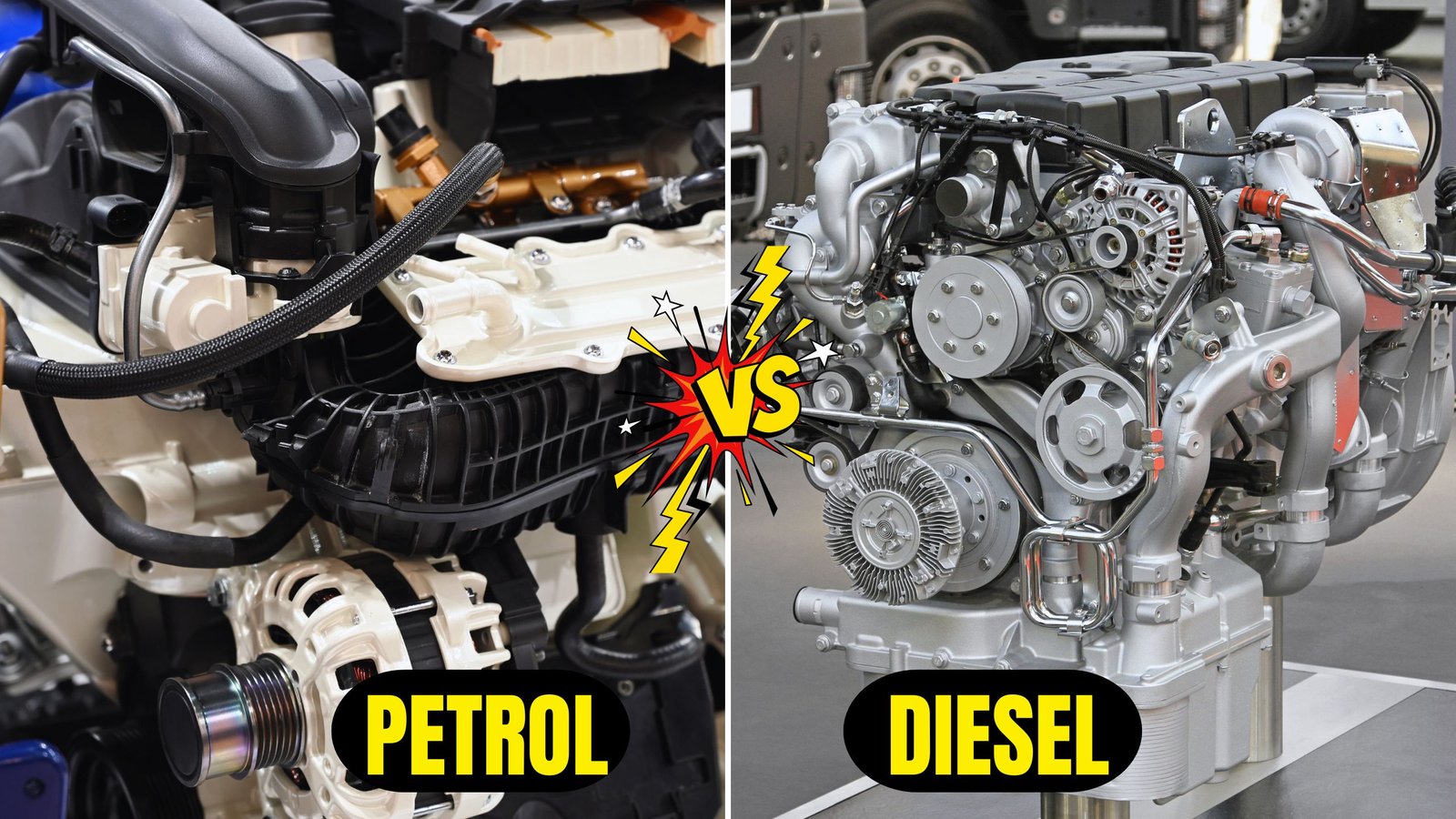
- Petrol Engines: Known for their high-revving nature and smooth performance, petrol engines are the heartbeat of many sports cars and everyday vehicles. The responsiveness of petrol engines makes them a favorite for those who love a spirited drive.
- Diesel Engines: Diesel engines are torque monsters, providing immense pulling power. They are the go-to choice for heavy-duty vehicles like trucks, buses, and some rugged SUVs. Their ability to handle heavy loads and tough terrains makes them indispensable in certain sectors.
2. Fuel Efficiency:
- Diesel Engines: Diesel engines are more fuel-efficient than their petrol counterparts, extracting more energy per gallon of fuel. This efficiency is particularly beneficial for long-distance drivers and commercial vehicles, making diesel ideal for long hauls and heavy-duty tasks.
- Petrol Engines: Petrol engines burn cleaner and have lower emissions, which is better for city driving and short trips. However, they are less fuel-efficient than diesel engines and require more frequent refueling.
3. Emissions and Environmental Impact:
- Diesel Engines: Diesel engines tend to emit more nitrogen oxides (NOx) and particulates, which are harmful to the environment. These emissions have become a point of contention, especially with increasing environmental regulations.
- Petrol Engines: Petrol engines generally produce lower emissions compared to diesel engines, making them a cleaner option for urban settings. Their lower noise levels and reduced emissions contribute to a more pleasant driving experience in cities.
4. Maintenance and Costs:
- Petrol Engines: Petrol engines are generally cheaper to maintain due to simpler mechanics and lower repair costs. This, coupled with quieter operation, makes them a practical choice for urban drivers.
- Diesel Engines: Diesel engines, while more efficient, are typically more expensive to maintain. They are noisier and rougher, and their higher maintenance costs can be a deal-breaker for some buyers.
Pros and Cons of Petrol and Diesel Engines
Petrol Engines:
- Pros:
- Smoother and quieter performance.
- Lower emissions, making them environmentally friendly.
- Cheaper maintenance costs.
- Better for city driving and short trips.
- Cons:
- Less fuel efficient.
- Lower torque at low RPMs, making them less suitable for heavy-duty tasks like towing or off-roading.
Diesel Engines:
- Pros:
- More fuel-efficient, translating to fewer stops at the pump.
- Higher torque, which is ideal for towing and off-roading.
- Better for long distances and heavy loads.
- Cons:
- Higher emissions, which can be a concern for environmentalists.
- Noisier and rougher operation.
- More expensive to maintain.
Choosing the Right Engine for You
So, which engine should you choose? It depends on your needs, driving habits, environmental concerns, and budget. Here’s a quick guide:
- City Driving and Short Trips: If you frequently drive in the city and prefer a smooth, quiet ride, a petrol engine might be your best bet. The lower emissions and maintenance costs make it a practical choice for urban dwellers.
- Long-Distance Travel and Heavy-Duty Tasks: If you’re covering long distances, towing, or need serious low-end power, diesel is the way to go. The fuel efficiency and torque make it ideal for heavy-duty tasks and long journeys.
Both petrol and diesel engines have their unique strengths and serve different purposes. The choice boils down to your specific driving habits and environmental considerations. Whether you prioritize performance, efficiency, or environmental impact, there’s an engine out there for you.
Also Read About- Which Royal Enfield Motorcycles is Best
Looking Ahead: The Future of Automotive Engines
Before we wrap up, let’s take a moment to appreciate the advancements in both diesel and petrol technologies. Modern engines are more efficient and cleaner than ever before. With the rise of hybrid and electric vehicles, the landscape of automotive engines is evolving rapidly. These technologies combine the best of both worlds, offering efficiency and performance.
- Hybrid Engines: These engines use both petrol and electric power, providing a balance between fuel efficiency and lower emissions.
- Electric Vehicles (EVs): EVs offer zero emissions and are becoming more accessible to the general public. While diesel and petrol engines still dominate the market, the future is leaning towards greener alternatives.
It’s an exciting time for car enthusiasts and environmentalists alike. Innovations like solar-powered cars and renewable energy sources are on the horizon, promising a cleaner and more sustainable future for transportation.
Conclusion
As we move forward, staying informed about these changes is essential. Whether you’re a petrol head, a diesel devotee, or an electric enthusiast, the automotive world has something exciting for everyone. Keep exploring, stay curious, and enjoy the ride—the journey of automotive innovation is far from over, and there’s always something new to discover!