
When you learn to drive, mastering the steering wheel is one of the most challenging skills. The steering mechanism is more than just a tool for changing directions—it’s a sophisticated system underpinned by fascinating physics and intricate mechanisms that keep the vehicle on track without skidding. Understanding the principles behind steering can help drivers appreciate how the forces at play work together to ensure smooth and safe turns.
This article explores why steering mechanisms are crucial for vehicles and how they function to maintain control and prevent skidding. It also delves into the evolution of power steering, from its early hydraulic beginnings to the modern electric systems that enhance driving precision and efficiency.
What is Power Steering?
Initially, all vehicles had manual steering, requiring significant physical effort to turn the wheel, especially in heavy vehicles. Power steering revolutionized this by making steering more manageable and less tiring. The 1951 Chrysler Imperial was the first mainstream car with power steering, a system called “Hydra-Guy.”
1. Hydraulic Power Steering:
- In the early days, power steering used hydraulics. A hydraulic pump, driven by a belt from the engine, supplied pressure to a hydraulic ram that helped move the steering rack.
- While effective, these systems had drawbacks, such as continuous engine drag, even when the steering wasn’t being used, resulting in parasitic power loss. This design impacted fuel efficiency.
2. Electric Power-Assisted Steering (EPAS):
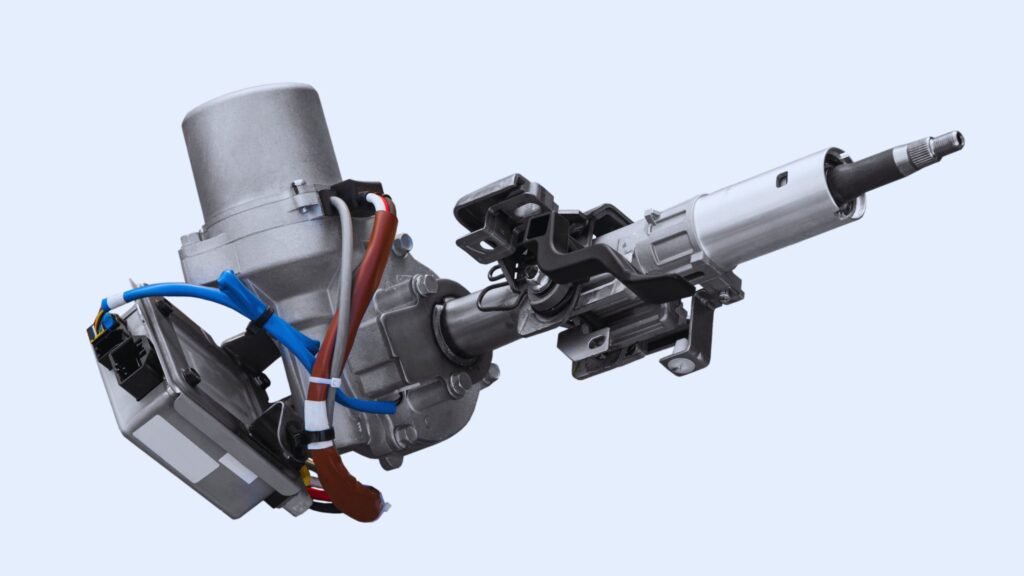
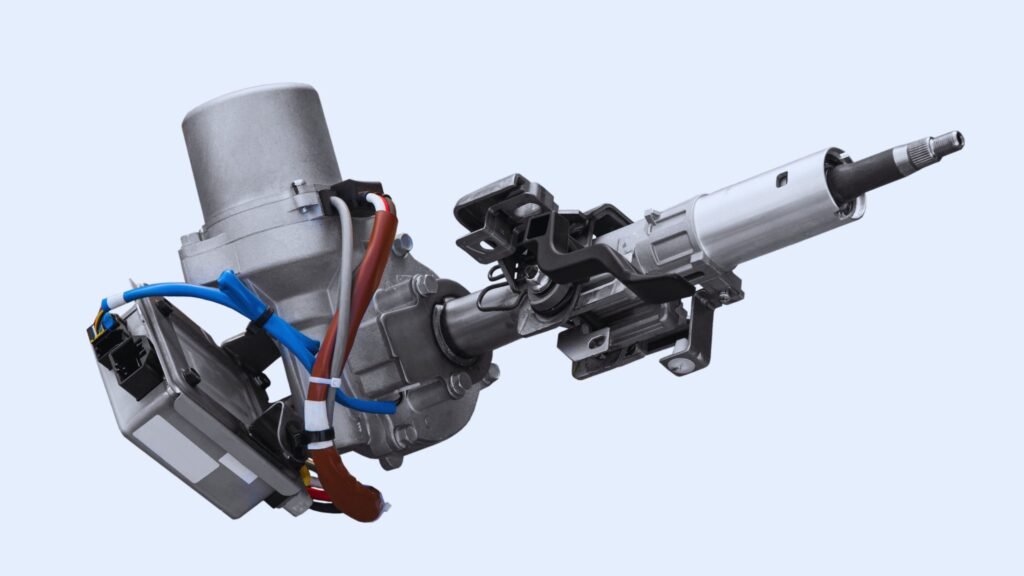
- Modern vehicles have mostly transitioned to Electric Power-Assisted Steering (EPAS), which offers numerous advantages over hydraulic systems.
- In EPAS, an electric motor is used to assist the steering instead of a hydraulic pump. This motor can be mounted directly on the steering rack or the steering column. It senses the driver’s effort on the steering wheel and provides additional force in the same direction.
- Advantages of EPAS:
- Efficiency: EPAS saves up to 90% of the energy that would otherwise be wasted by hydraulic systems. For example, the 2013 Chevy Malibu achieved a 2.5% improvement in fuel economy due solely to electric power steering.
- Adaptability: EPAS can be integrated with vehicle control systems for automated parking assistance, lane departure correction, and other semi-autonomous driving functions.
- Accuracy: Driven by software, EPAS allows for easy tuning and fine adjustments, which is not possible with hydraulic systems.
- Compactness: The electric system eliminates the need for pumps, belts, and valves, saving space and weight, leading to a cleaner and more efficient engine bay.
The Physics Behind Steering: Why Vehicles Turn
To understand why a vehicle turns when you tilt the front wheels, rather than continuing straight, we need to dive into the physics of wheels. A rolling wheel, in its perfect state, has zero velocity at its contact point with the road. This condition ensures no slippage between the stationary road and the moving wheel. But how does a moving wheel achieve zero velocity at one point on its surface?
This phenomenon occurs because a rolling wheel exhibits two types of motion: translational (the wheel moves in the direction of the car) and rotational (the wheel rotates around its axis). At the bottom of the wheel, these two motions counteract each other, resulting in a zero net velocity at the contact point. This principle is essential for understanding how steering works.
If the car continued to move straight even after the wheels turned, the rotational velocity would no longer cancel out the translational velocity at the contact point, leading to skidding. To maintain zero velocity at the contact point, the entire vehicle must turn around a specific center point. Therefore, all four wheels must meet the perfect conditions of rolling. For a flawless turn, the perpendicular lines from the front wheels must intersect the rear wheel axis at a common point—this principle underpins the steering mechanism.
Steering Mechanisms: How They Work
If you observe the steering mechanism carefully, you’ll notice that the left and right wheels don’t turn at the same angle. This is necessary for perfect steering, and the most commonly used mechanism to achieve this in modern vehicles is the rack and pinion type.
- Rack and Pinion Mechanism:
- The rack is a straight gear that moves only in a linear direction.
- The pinion, a round gear connected to the steering wheel, moves the rack when rotated.
- Steering arms are attached to the wheels and are connected to the rack via tie rods. These arms are constrained to rotate only along a fixed axis.
- When the rack moves, the wheels turn at different angles, ensuring the vehicle turns without skidding. The rack and pinion mechanism satisfies the conditions for perfect steering by aligning the wheel paths correctly.
The Future: Steer-by-Wire Systems
The next step in steering technology is “steer-by-wire” systems. In this setup, the steering wheel essentially becomes a game controller, with no mechanical connection to the front wheels. Instead, the steering input is transmitted electronically, offering unprecedented levels of customization and control. Such systems can further enhance autonomous driving capabilities and provide even more compact and efficient designs.
Also Read About- Diesel vs. Petrol Engines
Conclusion
The steering mechanism in vehicles has evolved significantly from manual systems requiring brute strength to sophisticated electric systems that enhance safety, comfort, and efficiency. Understanding the physics behind steering and how these mechanisms work gives us a deeper appreciation for this essential aspect of automobile engineering. As technology progresses, we can expect even more innovative developments in steering systems, paving the way for safer and more autonomous vehicles.