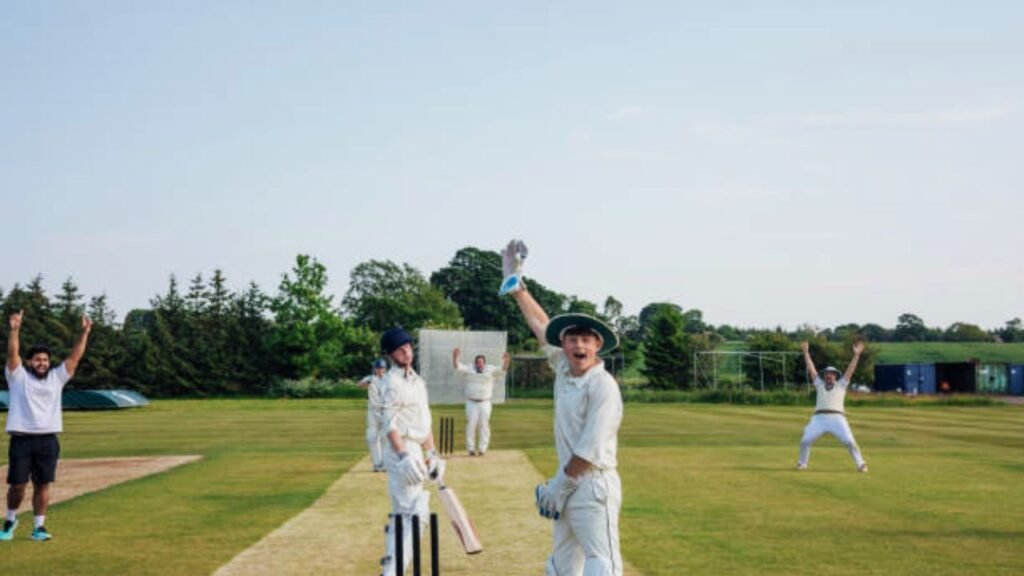
In cricket, “how’s that?” (often said as “howzat”) is a phrase used by fielders to ask the umpire if a batsman is out. This request can be for different types of dismissals, like being caught, bowled, or out leg before wicket (LBW). It is usually shouted loudly to get the umpire’s attention and ask for a decision.
Fielders must appeal before the next ball is bowled, and the umpire decides based on the rules of cricket. The phrase “how’s that?” is well-known in cricket and is often linked to the excitement and drama of the game. However, the batsman always has the right to stick to his point and wait for the umpire’s decision.
The origin and history of the phrase ‘How’s That’
The phrase “How’s that?” has been used in cricket for a long time, starting in the early days of the game. Here is a simple look at its origin and how it has changed over time:
Origin
“How’s that?” comes from the question “How is that?” which fielding teams used to ask the umpire if a batsman was out. It likely began in the 18th century when the first rules of cricket were created.
Meaning and Usage
When a fielding team thinks they have gotten a batsman out, they shout “How’s that?” or the shorter “Howzat?” to ask the umpire for a decision. This can happen if a batsman is caught, bowled, run out, stumped, or out leg before wicket (LBW). The appeal is a well-known part of cricket and can be made by one player or the whole team together. Sometimes, captains encourage a team appeal to try and influence the umpire’s decision.
Evolution
Over time, “How’s that?” has changed into cricket slang and is now often said and written as “Howzat?” There are other versions like “Owzat?” and “Owzthat?” as well. While “Howzat?” is the most common way to appeal, it’s not the only way. As long as it’s done respectfully, players can appeal with gestures, raised hands, or any other way that shows their intent to the umpire.
In short, “How’s that?” or “Howzat?” has been a key part of cricket since the 18th century, helping fielding teams appeal for a dismissal and ask for the umpire’s decision. While its form and sound have changed, the basic idea has stayed the same.
The rules and regulations surrounding the ‘How’s That’ appeal
The appeal “How’s That?” in cricket follows specific rules in the Laws of Cricket. Here are the main points about how the appeal works:
Rules for the Appeal
1. Need for an Appeal:
- Under Law 31, the umpire cannot declare a batsman out unless the fielding team appeals. This is usually done by shouting “How’s That?” or “Howzat?”
2. Timing of Appeals:
- An appeal must be made before the bowler starts their run-up or bowling action for the next ball. It should happen while the ball is still in play and before the next delivery.
- If the ball is dead after a delivery, the appeal is not valid anymore. But if the appeal is made before the umpire calls “over,” it can be carried over to the next over, unless “time” is called.
3. Types of Dismissal:
- “How’s That?” covers all types of dismissals, like caught, bowled, run out, stumped, and leg before wicket (LBW).
4. Umpire’s Decision:
- The umpire at the bowler’s end decides on the appeal. If unsure, they can consult the other umpire, especially if the other had a better view. If there is still doubt, the decision goes in favor of the batsman.
- The umpire’s decision is final but can be changed if done quickly after the appeal.
5. Withdrawing an Appeal:
- The fielding team’s captain can withdraw an appeal if the batsman hasn’t left the field yet. If the appeal is withdrawn, the umpire can change their decision if needed.
6. Unsportsmanlike Behavior:
- Excessive or intimidating appeals are seen as bad conduct and can lead to penalties, like awarding runs to the batting side or other disciplinary actions against the fielding team.
In short, “How’s That?” is an important part of cricket, with clear rules on how it should be done and how umpires respond. Knowing these rules helps players follow the game’s legal guidelines properly.
Famous ‘How’s That’ moments in cricket history
Here are some of the most famous “How’s That?” appeals and moments in cricket history:
1. Ian Botham’s Ashes Heroics (1981)
In the 1981 Ashes series, during the third Test at Headingley, England was struggling. Ian Botham scored a brilliant 149 not out, turning the game around. His amazing play, along with Bob Willis taking 8 wickets, helped England win against all odds. The English fielders’ constant “How’s That?” appeals were key to this memorable comeback.
2. Sachin Tendulkar’s Desert Storm (1998)
In the 1998 Coca-Cola Cup in Sharjah, India had to win against Australia. Sachin Tendulkar played two outstanding innings of 143 and 134, even as a sandstorm swept through. His incredible batting, along with the loud “How’s That?” appeals from the Indian fielders, is remembered as one of the greatest performances in cricket.
3. Javed Miandad’s Last-Ball Six (1986)
In the 1986 Austral-Asia Cup final between Pakistan and India, Pakistan needed 4 runs to win from the last ball. Javed Miandad hit a six off Chetan Sharma’s delivery, winning the match for Pakistan. The Indian team’s “How’s That?” appeal didn’t change the outcome, and Miandad’s last-ball six became a legendary moment in cricket history.
4. Shane Warne’s Ball of the Century (1993)
In the first match of the 1993 Ashes series, Australian spinner Shane Warne bowled a stunning delivery to get England’s Mike Gatting out. The ball pitched outside leg stump and spun sharply to hit the off bail. The surprised look on Gatting’s face and the loud “How’s That?” appeals from the Australian team marked Warne’s grand entry into international cricket.
“How’s That?” moments that have thrilled cricket fans around the world. The appeal has become a key part of cricket history, often linked with unforgettable performances and great team victories.
The role of technology in determining ‘How’s That’
Technology has greatly changed how “How’s That?” appeals are handled in cricket, making umpire decisions more accurate and fair. Here are the key technologies that help determine the outcomes of these appeals:
1. Decision Review System (DRS)
The Decision Review System (DRS) helps umpires make better decisions on appeals. It allows teams to challenge the on-field umpire’s call, including “How’s That?” appeals. Important parts of DRS include:
- Ball Tracking Technology: Tools like Hawk-Eye track the ball’s path to see if it would hit the stumps in LBW appeals or to check the ball’s path in catch decisions.
- Infrared Imaging (Hot Spot): This shows where the ball touched the bat or pad, helping to decide if a batsman is out by a catch or LBW.
- Sound Analysis (Snickometer): This picks up small sounds when the ball hits the bat or pad, providing extra evidence for the umpire.
Teams have a limited number of reviews per innings, adding strategy to the use of technology in appeals.
2. Third Umpire
The third umpire helps on-field umpires by using different camera angles and replays to review close decisions, such as run-outs and catches. This system has been used since 1992, and its combination with DRS has made it even more useful for appeals.
3. Enhanced Broadcast Technology
Modern broadcast technology, like high-definition replays, slow-motion, and multiple camera angles, allows for better analysis of appeals. This helps both umpires during the game and fans watching at home understand the decisions better.
4. Future Innovations
As technology advances, there are ideas for new tools to improve the appeal process:
- Immediate No Ball Detection: Tools that can automatically detect no balls, allowing umpires to focus on the game rather than checking the bowler’s foot.
- Wearable Technology: Sensors and other devices could provide real-time data on bowlers’ actions, helping to spot illegal deliveries or analyze performance.
Overall, technology has changed the “How’s That?” appeal process in cricket by making decisions more accurate and reducing the pressure on umpires. Systems like DRS and the role of the third umpire have made the game fairer, ensuring appeals are decided with more confidence and precision.
Strategies and tactics for successful ‘How’s That’ appeals
To make successful “How’s That?” appeals in cricket, teams need good strategies and tactics. Here are some important tips for increasing the chances of winning an appeal:
1. Timing of Appeals
- Appeals must be made before the bowler starts their run-up for the next ball. The timing is very important to make sure the umpire hears the appeal while the ball is still in play.
- Appealing right after a possible dismissal gives a better chance of getting a favorable decision. Appeals made too late are less likely to succeed.
2. Appealing Together as a Team
- When the whole fielding team appeals together, especially with the bowler and captain leading, it can put pressure on the umpire. A loud and energetic “How’s That?” can grab the umpire’s attention.
- However, too much or aggressive appealing can be seen as bad sportsmanship. Teams need to balance enthusiasm with respect.
3. Understanding Different Dismissal Types
- Different ways of getting a batsman out have different success rates when appealing. For example:
- LBW appeals succeed about 19% of the time.
- Appeals for catches behind the wicket succeed about 61% of the time.
- Stumping appeals succeed about 60% of the time.
- Focusing on appealing for dismissals that have higher success rates, like catches behind, can improve a team’s overall success.
4. Bowling Tactics
- Some bowlers are more successful with appeals than others. For example, spinners like Ashley Giles (14%) and Saqlain Mushtaq (16%) had lower success rates than fast bowlers like Glenn McGrath (over 45%).
- Mixing up bowling tactics and types of dismissals can help keep the appeals effective. Relying too much on one type of dismissal can make appeals predictable.
5. Knowing the Umpire’s Style
- Understanding how different umpires make decisions can help shape a team’s appeal strategy. For instance, umpire Steve Davis gave 21% of his decisions as LBW, which was the highest percentage among umpires.
- Knowing which umpires are more likely to give certain types of dismissals can help teams adjust their appeal tactics.
To sum up, successful “How’s That?” appeals need good timing, teamwork, an understanding of different dismissals, varied bowling tactics, and knowledge of umpire tendencies. Using these strategies can help fielding teams make the most of their appeals and increase their chances of getting batters out.
‘How’s That’ in different formats of cricket – Test, One Day, and T20
In cricket, the “How’s That?” appeal is important in all formats of the game—Test matches, One Day Internationals (ODIs), and Twenty20 (T20) matches. While the basic idea of appealing is the same, the way appeals are made can be very different in each format.
Test Matches
- Type of Appeals: In Test cricket, appeals are more planned and thoughtful. Because these matches last longer, bowlers and fielders have more time to think carefully about when to appeal. LBW appeals are very common in Test matches because they rely on analyzing the batsman’s position and the pitch conditions.
- How Often They Appeal: In Test matches, about 77% of appeals are for LBW, and around 13% are for catches behind the wicket. The slower pace of the game allows players to appeal more carefully, and teamwork is often used to try to influence the umpire’s decision.
- Player-Umpire Interaction: In Test matches, players usually show more respect and politeness when appealing. The relationship with umpires is more noticeable, and players often appeal in a way that acknowledges the umpire’s experience.
One Day Internationals (ODIs)
- Quick Appeals: ODIs are faster-paced, leading to more quick and spontaneous appeals. Fielders often shout “How’s That?” more frequently to put pressure on the batsman and the umpire, especially in crucial moments of the game.
- Using DRS Smartly: With the Decision Review System (DRS) available in ODIs, teams can challenge the umpire’s decision. This adds a strategic element, as teams must carefully choose when to use their reviews based on the strength of their appeal.
- Focus on Run-Outs: Run-out and stumping appeals are more common in ODIs because the format is shorter and the batting is more aggressive. Players are more likely to appeal for close decisions, knowing that each wicket can be very important.
Twenty20 (T20)
- High Energy and Emotion: T20 matches are very fast and intense, which leads to louder and more animated appeals. The excitement of the format often causes players to appeal even for close decisions.
- Frequent Use of Technology: T20 matches often use DRS to quickly review disputed decisions. This is particularly helpful for LBW and caught behind appeals, where accuracy is very important.
- Mind Games: In T20s, the mental side of appealing is stronger. Fielders often appeal loudly to unsettle the batsman and create pressure, which can lead to mistakes. Since every wicket is crucial in this short format, teams tend to appeal more aggressively.
While the “How’s That?” appeal is a key part of cricket in all formats, the way teams appeal varies a lot. In Test matches, appeals are more planned and careful, while in ODIs and T20s, they are more spontaneous and filled with emotion. The use of technology like DRS also changes how appeals are made and judged, adding a modern twist to this traditional part of the game.
Also Read About- The Importance of Power Play in Cricket
The impact of ‘How’s That’ decisions on the outcome of matches
“How’s That?” decisions can greatly impact the outcome of cricket matches. These decisions don’t just affect whether a player is out; they can also change the momentum and psychology of the game. Here are some key points on how these decisions can influence matches:
1. Impact on Match Results
- Important Moments: Decisions from appeals can change the direction of a match. For example, getting a key batsman out through an LBW or catch can break the batting team’s strategy and lower their confidence. On the other hand, a failed appeal can boost the batting side’s morale, especially if it involves a key player.
- Research Findings: Studies show that some decisions have a bigger impact on the outcome of matches. For instance, in football, favorable referee decisions can increase a team’s chances of winning .
2. Psychological Effects
- Shifts in Momentum: A successful appeal can give the fielding team a mental advantage, causing batsmen to feel nervous or make mistakes. This can lead to poor shots or overly cautious play, affecting the batting side’s overall performance.
- Pressure on Umpires: Appeals can also put pressure on umpires, especially in important matches. The crowd’s reaction and the situation of the game can influence their decisions, potentially leading to biased calls .
3. Strategic Use of DRS
- Decision Review System (DRS): The use of DRS adds strategy to the game. Teams must carefully choose when to use their reviews, as losing a review means they can’t challenge future decisions. This element of strategy can change the flow of the game as teams weigh the risks and benefits of appealing .
4. Long-Term Effects
- Team Reputation and Confidence: Teams that consistently make successful appeals can build a reputation for being smart and effective, which can influence future matches. A strong reputation for appealing may also create a psychological advantage over opponents and umpires.
- Training and Preparation: Knowing how much “How’s That?” decisions can affect a game may lead teams to train players on effective appealing techniques, such as body language and understanding umpire behavior. This preparation can improve a team’s overall performance in future games.
In short, “How’s That?” decisions are a crucial part of cricket that can affect the immediate results of dismissals, the psychological balance of the game, team strategies, and even future performance and reputation.
Conclusion and the future of ‘How’s That’ in cricket
The appeal “How’s That?” is more than just a routine in cricket; it captures the competitive spirit and the focus on fairness in the game. Over the years, it has been key in deciding match outcomes, changing momentum, and affecting the mental side of the game. The use of technology, especially the Decision Review System (DRS), has made these appeals more accurate, allowing teams to challenge umpire decisions and ensuring fair play.
As cricket changes, especially with the growth of franchise leagues and shorter formats like T20, the way appeals are made might also change. The popularity and money involved in shorter formats may affect traditional formats like Test cricket and how appeals are used. However, the core purpose of the appeal stays the same: it connects players and umpires and helps maintain the fairness and integrity of the game.