
If you’re a gearhead or simply love the roar of a high-performance engine, you’ve probably heard about superchargers. But what exactly are they, and how do they differ from turbos? Both are air compressors that help engines produce more power, but the way they achieve it is quite different.
Let’s dive deep into the world of superchargers and explore their types, how they work, and why they’re such a big deal in the performance world. Superchargers offer a unique approach to boosting engine power, and understanding their mechanics can help you appreciate the technology that goes into making high-performance vehicles even more thrilling to drive.
What is a Supercharger?
A supercharger is essentially an air compressor that forces more oxygen into an engine’s combustion chamber. More oxygen means more fuel can be burned, resulting in more power.
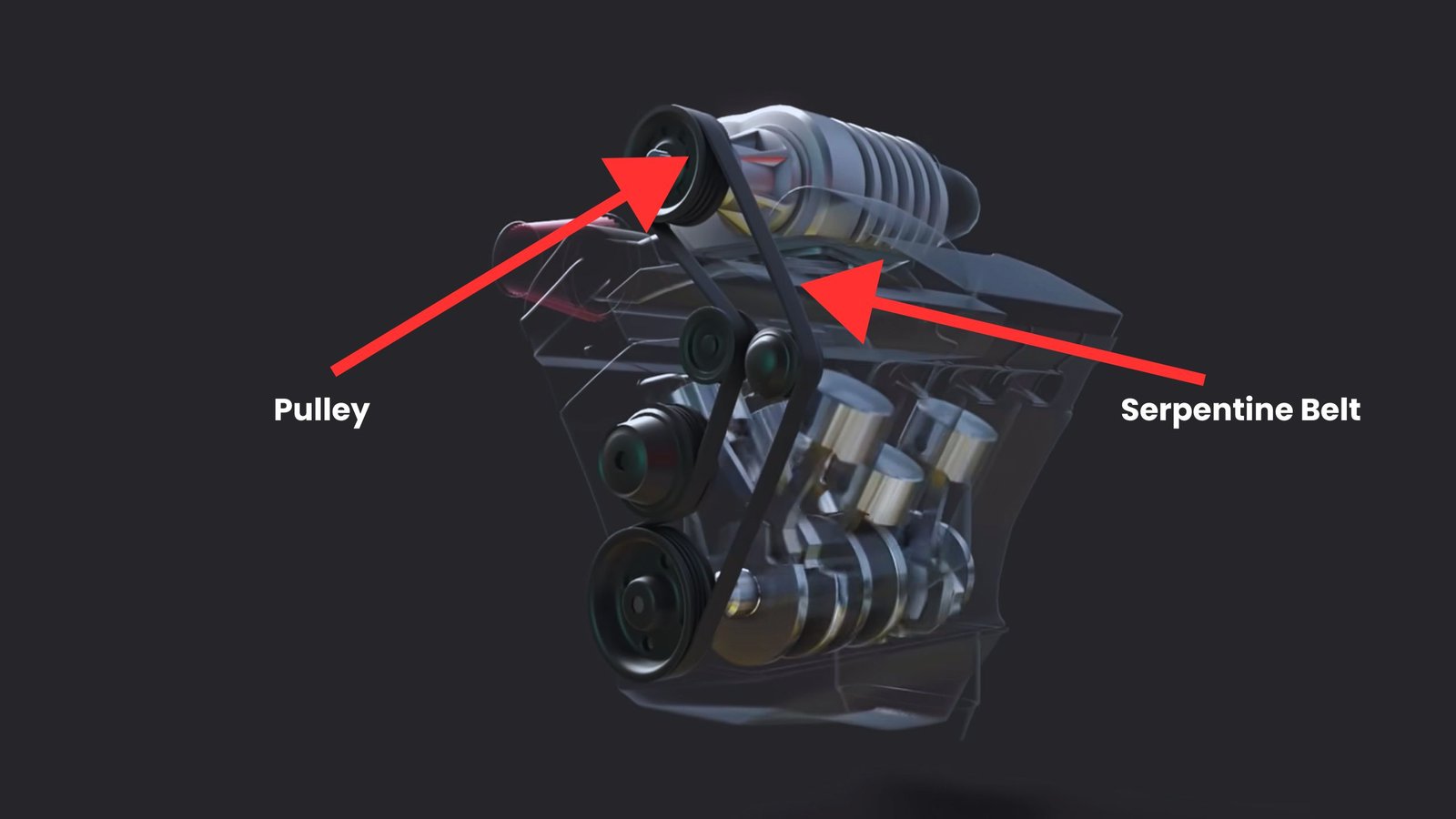
Unlike a turbocharger, which is driven by an engine’s exhaust gases, a supercharger is mechanically driven by a belt connected directly to the engine’s crankshaft. This fundamental difference gives superchargers their own unique advantages and quirks.
The Difference Between Superchargers and Turbos
Both superchargers and turbos are considered “dynamic compressors,” which means they work by accelerating air to high speeds and then slowing it down to increase its pressure.
However, while a turbocharger is powered by exhaust gases, a supercharger is driven by the engine itself, resulting in a different kind of power delivery and performance characteristic.
Types of Superchargers
There are two main types of superchargers: Centrifugal Superchargers and Positive Displacement Superchargers. Let’s break down each type and see what makes them unique.
1. Centrifugal Superchargers
Centrifugal superchargers are relatively compact and easy to bolt onto an engine. They function similarly to a turbocharger in that they use centrifugal force to compress air. The key characteristic of a centrifugal supercharger is its “peaky” power delivery—it really starts to shine at higher RPMs. However, like turbos, they need time to spool up and don’t perform well at low RPMs, which can lead to a delay in power delivery.
2. Positive Displacement Superchargers
Positive displacement superchargers provide a different kind of boost experience. There are two primary types of positive displacement superchargers: Twin-Screw Superchargers and Roots-Type Superchargers.
- Twin-Screw Superchargers: These are sometimes called “Lysholm” compressors. The twin-screw supercharger moves a consistent amount of air per revolution, offering instant and continuous boost across the entire RPM range. Inside, two interlocking screws (one male and one female) compress air as it moves from the back to the front of the unit. This ensures that dense, compressed air enters the engine quickly, resulting in immediate throttle response and powerful acceleration right off the line.
- Roots-Type Superchargers: Often referred to simply as “blowers,” the Roots-type is the OG of supercharger designs. It was initially patented in the 1860s to ventilate blast furnaces and mineshafts, but it wasn’t long before they found their way into high-performance automotive applications. Inside a Roots supercharger, two symmetrical rotors with enmeshed lobes rotate to trap and move air from the intake to the engine. Unlike twin-screw superchargers, Roots blowers do not compress the air within the unit; instead, they shove large volumes of air into the engine, which is why they’re called “blowers.”
Cooling Matters: Intercoolers and Efficiency
One of the challenges of using a supercharger is that compressing air generates heat, and hot air is less dense, reducing its effectiveness in producing power. To combat this, many superchargers are equipped with intercoolers.
Turbos typically route compressed air through an intercooler before it enters the engine, but superchargers are often mounted directly over the intake, with a liquid-cooled intercooler system right there to cool the air before it gets ingested.
The Modern Marvel: Roush Performance Phase 1 Supercharger
A great example of modern supercharger technology is the Roush Performance Phase 1 supercharger, specifically designed for the 2018 Mustang GT. This system uses a highly efficient Roots-type design with twin four-lobe rotors twisted to 170 degrees. The unique input and output ports provide improved thermal efficiency, airflow, and reduced noise and vibration, making it a top-tier choice for enthusiasts looking to boost their car’s performance.
The Roush supercharger can move an incredible 2,650 cc (2.65 liters) of air with each full rotation, significantly increasing an engine’s effective displacement. This system, when properly installed, can add up to 240 horsepower and 180 lb-ft of torque, bringing the Mustang GT’s total output to a staggering 700 horsepower and 610 lb-ft of torque.
Also Read About- How Turbochargers Work in Your Car
Complete Supercharger Kits: The Key to Reliability
Installing a supercharger isn’t just about bolting on a new part; it involves careful tuning and the integration of several components. That’s why performance companies like Roush offer complete supercharger kits that include the supercharger, custom aluminum upper and lower manifolds, an air-to-water intercooler, and an ECU upgrade.
These components are engineered to work together seamlessly, ensuring that your engine performs reliably and powerfully.
Conclusion: Why Choose a Supercharger?
Superchargers provide an excellent way to increase engine power and responsiveness without the lag often associated with turbochargers. Whether you opt for a centrifugal supercharger or a positive displacement model like the Roots or twin-screw, you’re guaranteed a significant boost in performance. And with modern innovations, superchargers are more efficient, reliable, and powerful than ever before.