In this article
The landscape of professional Soccer leagues around the world is constantly changing. This is due to a variety of factors, such as the performance of teams on the field, their financial situation, the presence of top players in the league, marketing strategies and their availability to fans.
It is important to understand how all these factors relate to each other to determine which leagues are the most popular and influential. This blog post highlights the most popular Soccer leagues in the world, analyzing their rankings, viewership and the main factors that attract fans.
Global Soccer League Rankings
Ranking Soccer leagues is not easy, as popularity has many facets. Viewership numbers do give us some insight, but they do not fully reflect the depth of fan engagement, the league’s brand value or its financial stability.
Similarly, league revenues can also be affected by factors such as broadcast rights and sponsorship deals. Therefore, for a fair assessment, it is important to look at different parameters, while also understanding the limitations of each approach.
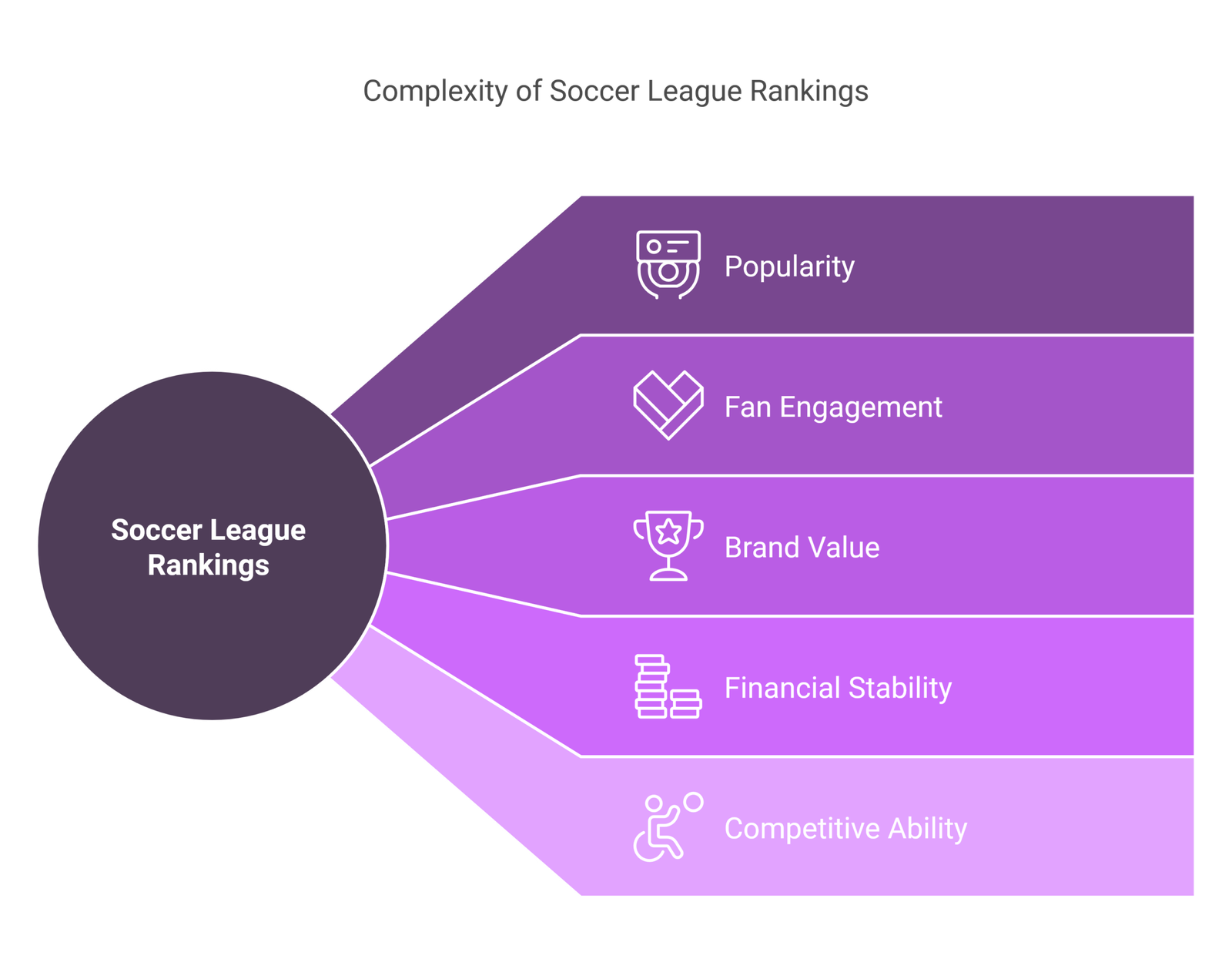
For example, the UEFA coefficient ranking is primarily based on clubs’ performance in continental competitions. This ranking assesses competitive ability, but does not fully reflect the overall popularity of a league. While these rankings are useful in understanding the quality of play on the field, they do not fully capture the broader factors that contribute to a league’s attractiveness and influence.
Top 10 soccer leagues in the world
- English Premier League
- Serie A
- German Bundesliga
- LaLiga
- Ligue 1
- Brasileirão
- Primeira Liga
- Belgian Pro League
- Major League Soccer
- English Championship
These leagues have a rich history of success in continental competitions. Their clubs regularly compete for the prestigious UEFA Champions League and Europa League titles. This reflects their competitiveness and high level of play, which attracts Soccer fans from all over the world.
Rise of Non-European League
While European leagues still dominate world Soccer, leagues outside Europe are also making their mark, thanks to the ability to produce better players, enthusiastic fans, and easy access to Soccer.
- Brazilian Serie A: Brazilian Serie A is world-renowned for its passionate and vibrant fan culture. The league has always been a nursery for the world’s best footballers, producing many legends. Brazilian clubs have consistently excelled in continental competitions, further enhancing the league’s reputation.
- Major League Soccer (MLS): Major League Soccer (MLS) is expanding rapidly in the United States and Canada. Heavy investment, the league’s expansion into new markets, and the arrival of world-class players such as Lionel Messi are playing a key role in this growth. However, its popularity compared to European leagues is still debated, especially since MLS viewership data on Apple TV is not publicly available. Nevertheless, the growing popularity among general viewers clearly demonstrates the league’s growing influence.
- Liga MX: Liga MX has a strong following among Hispanic communities in the United States. The league’s cup matches see massive attendance, especially when these matches are held in the US. Its easy accessibility to Spanish-speaking audiences is a major reason for its popularity, and clearly shows how important it is to understand and cater to the needs of a diverse audience.
US Soccer Landscape
Soccer landscape in the United States is changing rapidly. Major League Soccer (MLS) is trying to establish itself in a market already dominated by European leagues and the popularity of Liga MX on a regional level.
- MLS Growth and the Casual Fan: Major League Soccer (MLS) is growing in popularity due to its accessibility, local rivalries, and efforts focused on community engagement. However, converting these casual viewers into long-term and devoted fans remains a significant challenge to the league’s continued success.
- Debate Over MLS Popularity: With viewership statistics for Major League Soccer (MLS) on Apple TV not publicly available, there is debate about its true popularity, especially in comparison to European leagues. While stadium attendance and empirical evidence show positive growth for the league, determining its exact position in the broader Soccer landscape remains challenging due to the unavailability of comprehensive statistics.
- Liga MX’s Regional Dominance: Liga MX has a strong presence among Spanish-speaking communities in the United States, which is especially evident when Liga MX teams play cup matches here and stadiums are packed with spectators. This regional dominance clearly demonstrates how important it is to understand the diverse demographics of soccer fans in the United States and provide services that suit their needs.
Factors that increased the popularity of Soccer leagues
Popularity of a Soccer league is influenced by a combination of a number of complex factors that contribute to its overall appeal and influence. The major reasons include:
- On-Field Success: Consistent success in domestic and continental competitions elevates a league’s reputation and plays a vital role in attracting a global audience. For example, the UEFA Champions League has always attracted a large worldwide audience.
- Star Power: The presence of internationally recognised star players can greatly expand a league’s audience and fan base. The global popularity of players such as Lionel Messi and Cristiano Ronaldo transcends club borders, attracting fans wherever they play.
- Marketing and Branding: Strategic marketing campaigns play an indispensable role in establishing any league’s brand identity and developing a passionate fan base. Successful leagues skillfully utilize social media, digital platforms, and traditional media to effectively connect with fans globally and build a strong, well-known brand.
- Accessibility: The availability of matches on television and streaming services is essential to ensure access to a wide audience. Leagues that enter into extensive broadcast contracts and partnerships with dedicated streaming platforms, particularly those that offer multilingual interpretation, generally achieve greater popularity globally. However, the division of media rights across platforms can create complications for some audiences, limiting reach and hindering growth.
- Financial Resources: Financial strength, often achieved through lucrative television broadcast rights contracts and sponsorship deals, allows leagues to invest in infrastructure, player acquisition and marketing. In turn, this fosters league growth and enhances competitiveness.
Also Read- Top 5 Best Premier League Players of All Time
Conclusion
The landscape of professional Soccer leagues globally is dynamic and constantly changing. It is influenced by a complex mix of factors. Although European leagues, particularly the ‘Big Five’ (England’s Premier League, Spain’s La Liga, Germany’s Bundesliga, Italy’s Serie A, and France’s Ligue 1), continue to lead the way in terms of viewership, revenue, and major players worldwide, non-European leagues, such as Brazil’s Serie A, the USA’s MLS, and Mexico’s Liga MX, are also growing rapidly and challenging the established order.
The future of popularity of soccer leagues depends on many factors, including the worldwide spread of the sport, new developments in broadcast and streaming technologies, and the emergence of new markets and fans. Leagues that embrace new ideas, prioritize audience reach, and invest strategically in player development, marketing, and fan engagement will be best positioned to succeed in this ever-changing and competitive environment.
FAQs About The Most Popular Soccer Leagues
What are the “Big Five” soccer leagues?
The Top Five” are the English Premier League, Spanish La Liga, Italian Serie A, German Bundesliga, and French Ligue 1. They are generally considered the most popular and financially powerful leagues in the world.
Why are the Top Five” so popular?
They attract top players, have a long history of success in European competitions, have invested heavily in global marketing and branding, and are widely accessible through television and streaming services.
How popular is Liga MX in the US?
Liga MX is very popular in the US, especially among Hispanic communities. It consistently draws large crowds for games played in the US and has higher average viewership than MLS and the Premier League on traditional television.
What factors determine a soccer league’s popularity?
On-field success, star power, marketing, accessibility, and financial resources all play a role.
How does the future of soccer league popularity look?
The continued globalization of soccer, advancements in broadcasting technology, and the emergence of new markets are likely to shape the future landscape.